
The Receipts #5: How I Built a Sustainable Content System
_By Ruth Maclang | The Receipts Series_
Content creators don’t burn out from creating too much.
They burn out from starting from scratch every single week.
No plan. No system. Just: “What should I post?”
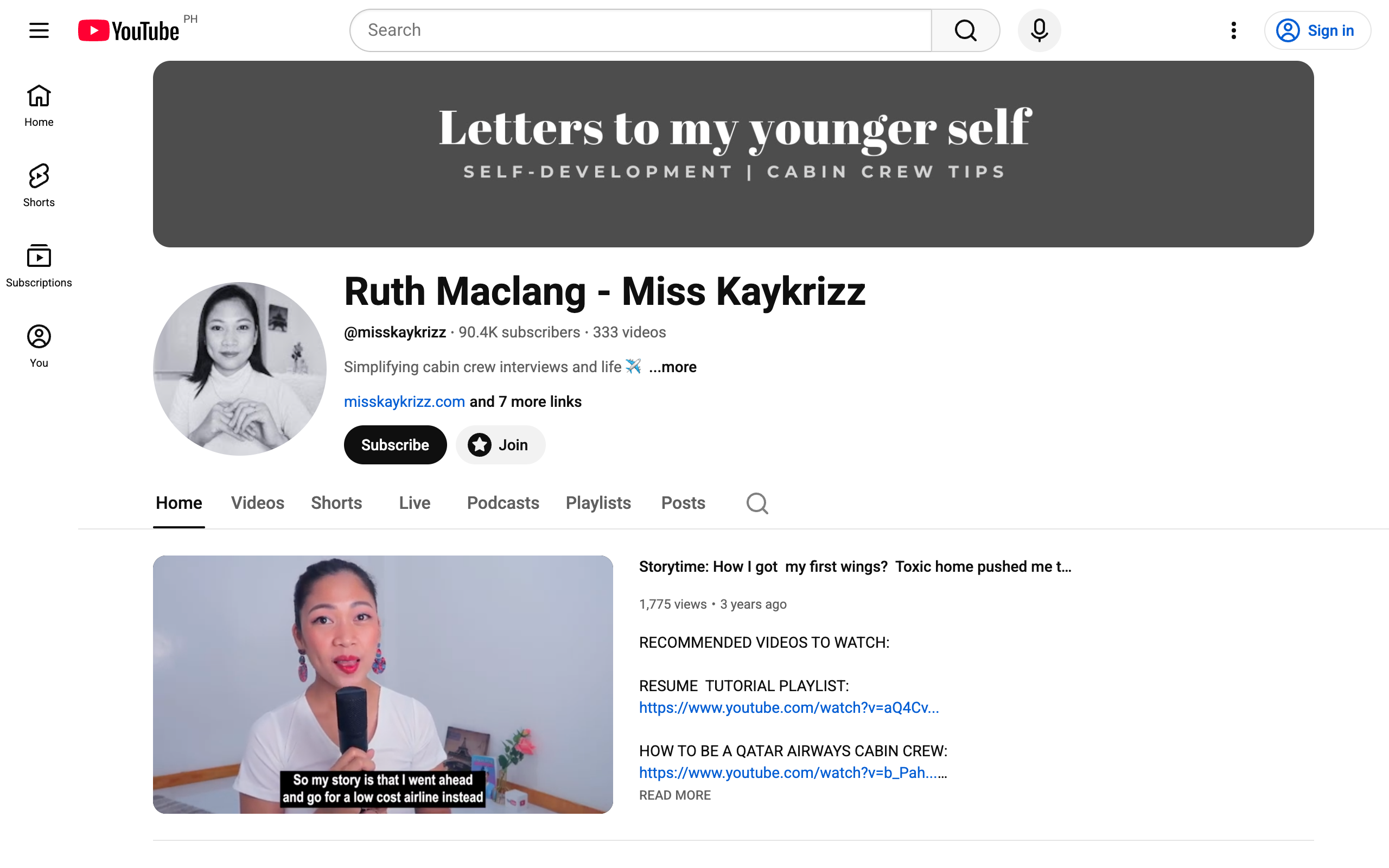
I’ve been a content creator for over a decade. Two YouTube channels. 91,000 subscribers on one. 53,000 on another.
Multiple other platforms. Multiple formats.
It was exhausting until I built a system around it.
After that, it was manageable. Even enjoyable.
You don’t need more time. You need a content system that doesn’t require genius every week.
The exhaustion years
For the first 5 years, I treated content like an art project.
Great idea? Make it. No idea? Don’t post.
Some weeks, I’d upload two videos. Some weeks, nothing.
The channel would grow inconsistently. Comments would drop. Algorithm stopped pushing me.
But more than that: I was exhausted.
Every week, I’d sit down and think: “Okay, what’s a good video?”
No framework. No system. Just me, a blank page, and the pressure to come up with something brilliant.
Some weeks, I’d have inspiration. I’d spend 6 hours filming and editing. Other weeks, I’d stare at the blank page for 30 minutes and post nothing.
The inconsistency hurt growth. But more importantly, the constant starting from scratch hurt me.
The system that changed everything
In year 6, I got tired of being burned out.
So I built the opposite: a system where I didn’t have to be brilliant every week.
Step 1: Content bucket system
I stopped thinking about individual videos.
Instead, I created 5 content buckets. Each bucket was a type of video I could reliably make:
- Airport stories: Actual experiences from my time as a flight attendant. Real, personal, relatable.
- Student tips: How-to, actionable advice for aspiring flight attendants.
- Question answers: Questions from subscribers, answered on camera.
- Day in my life: What a typical week looked like for me. No script needed.
- Book promotions: Talking about my book, sharing excerpts, telling people where to buy it.
These five buckets covered about 80% of my content ideas.
Step 2: Content calendar (quarterly)
Every quarter, I planned 12 videos.
Not in detail. Just: Week 1 is airport story, Week 2 is student tips, Week 3 is Q&A, etc.
The calendar rotated through the buckets. Over 12 weeks, each bucket got coverage.
That calendar removed the blank page. I never had to ask “what should I post.” I looked at the calendar and made what was scheduled.
Step 3: Batch recording
Instead of recording one video per week, I recorded 4 videos in one day.
Set up once. Light once. Camera position once. Makeup once.
Film four videos back to back. Different bucket, same setup.
This sounds simple. It changed everything.
Before: 6 hours per video (including setup, recording, waiting for inspiration).
After: 8 hours for 4 videos (2 hours per video, amortized setup).
Same output. Half the time. But more importantly: less decision fatigue.
Step 4: Template editing
I created an editing template.
Intro sequence. Outro sequence. Title cards. Graphics. Color scheme. All locked.
The editing became mechanical. I wasn’t making creative decisions. I was following the template.
The template included:
- Intro (10 seconds): My logo, audio sting, title
- B-roll placement: Where I’d cut in footage during talking heads
- Title cards: Same font, same color, same position
- Outro (15 seconds): Call to subscribe, where to find more, outro music
This took the edit from 3 hours per video to 1.5 hours.
Step 5: Scripting formula
For buckets that needed scripting (tips, Q&A), I used a formula:
- Hook (0-5 seconds): Why should you watch?
- Story/context (5-30 seconds): What happened, what I learned
- Advice (30-90 seconds): What to actually do
- Call out (90-120 seconds): Extra tip or deeper insight
- Outro (120-150 seconds): Subscribe, tell me what you think
The formula meant I could write a script in 20 minutes instead of 2 hours.
I wasn’t starting from scratch. I was filling in a form.
What changed
In the first year with the system, I shipped 12 videos consistently.
Not genius videos. Not viral videos. Just consistent, decent, reliable videos.
By year 2, the algorithm rewarded the consistency. Views went up. Subscribers went up.
By year 3, I had 91,000 subscribers.
But here’s the thing: the videos didn’t get smarter. The system got tighter.
I wasn’t suddenly brilliant. The system was doing the work.
What people usually get wrong
Most creators think the solution is “make better content.”
Nope.
The solution is “make content reliably without burning out.”
A mediocre post, published consistently, beats a brilliant post published once.
The algorithm rewards consistency more than quality. And your own energy rewards consistency more than perfection.
Most creators also think the solution is “hire an editor” or “get a team.”
Sometimes that helps. But more often, the problem isn’t the creator. It’s that there’s no system.
You can hire someone to follow a bad process and they’ll do a bad process faster. But a bad process stays bad.
System first. Then people (if you need them).
How to build your content system
You don’t need my exact system. You need a system. Here’s how to build one:
1. Identify your content buckets
What types of content do you know how to create? Not “what’s trendy.” What do you actually have material for?
Write down 5 types. That’s your palette.
2. Create a quarterly calendar
Pick 12 weeks. Assign one bucket per week. Rotate them.
That’s your plan. Done.
3. Batch when you can
Record 3-4 at once instead of one. Edit 3-4 at once.
Amortize your setup time.
4. Build a template
What’s the structure every piece of content follows?
Intro. Body. Outro. What assets repeat?
Create a template. Follow it.
5. Use formulas for writing
Don’t write fresh every time.
Use a formula. Hook → Story → Insight → Call out → Outro.
Fill in the blanks.
The lesson
You don’t create sustainable content because you’re brilliant.
You create it because you have a system that produces reliable content on a schedule, without requiring you to be brilliant every single week.
Bucket system. Calendar. Batching. Templates. Formulas.
None of these are creative. All of these enable consistency.
Consistency is where real growth lives.
FAQ
Q: Doesn’t a template make content boring?
A: No. A template is the structure. You bring the personality. Without the template, you’re too tired to bring anything.
Q: What if I don’t have 5 content types?
A: You do. You just haven’t named them. Watch what you naturally talk about. That’s your content.
Q: How often should I post?
A: Depends on the platform. But consistency matters more than frequency. Once a week, every week, beats 4 times a week with gaps.
Q: Should I batch record in person or online?
A: Doesn’t matter. The point is to reduce setup. Film 4 similar videos at once. The medium is secondary.
Q: What if I miss a week in the calendar?
A: Skip that week. Don’t try to catch up or double up. Keep the calendar for next week. A gap doesn’t ruin a system. Abandoning the system ruins the system.
Q: How long does it take to set up a content system?
A: 3-4 weeks to design it. Design the buckets. Design the template. Record your first batch. Edit. Launch. Then it becomes routine.
_This is The Receipts #5. Every week, I share a story from my career and the systems lesson buried inside it. Not advice. Proof._
Want to know the highest ROI to automate in your business? Book a complimentary 30-min consultation. I’ll look at what’s manual, what’s automatable, and what it’s costing you.
About the Author
Ruth Maclang builds AI-powered department systems for founders through StreamLab AI. Marketing, sales, ops — built once, runs lean. Connect with Ruth on LinkedIn or book a complimentary consultation at calendly.com/ruth-streamlabai/30min.
Leave a Reply