
The Receipts #4: How I Wrote a Book Without Free Time
_By Ruth Maclang | The Receipts Series_
Everyone has a book in them.
A course. A product. A framework they’ve been “working on.”
It’s been three years.
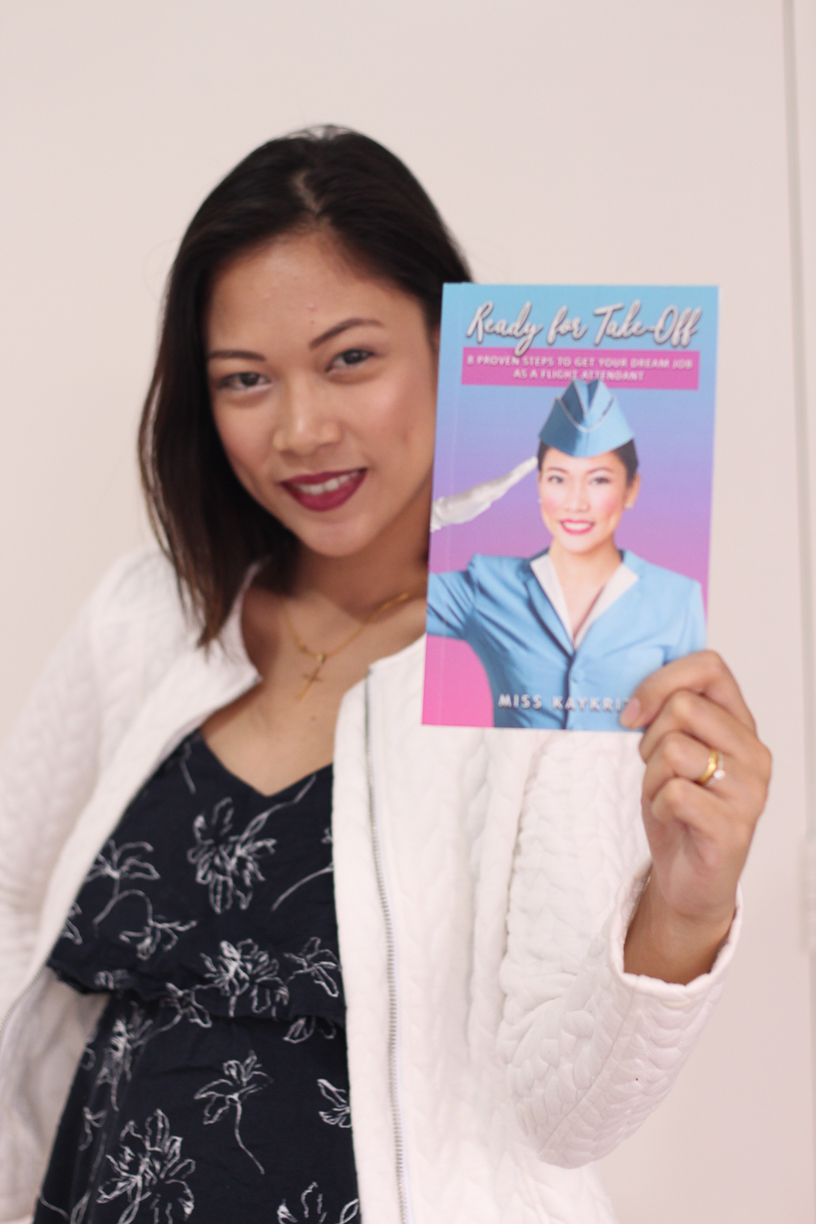
I wrote a book: _Ready for Takeoff_ by Miss Kaykrizz. A guide for aspiring flight attendants. Real book. Philippine bookstores. Amazon. Real ratings from real readers.
Not because I had free time. I didn’t.
Because I stopped waiting for free time and built a system around it.
The book nobody thought I’d finish
I started thinking about writing this book in 2014. It was 2017 before it actually existed.
Those three years? Not stuck. Just unfocused. I’d write a chapter, get excited, write another one, forget what I was doing, lose momentum, start over.
No system. No structure. Just me, an idea, and the hope that lightning would strike.
Here’s the problem: lightning doesn’t strike on a schedule.
In 2017, I got serious. Not because I suddenly had more time. I had less. I was working full-time, teaching, running a YouTube channel, and starting the candle business.
But I designed a system for writing.
The system that worked
Step 1: Table of contents first
I didn’t sit down and write a book.
I sat down and built an outline. 14 chapters. Each chapter one aspect of becoming a flight attendant: the application, the training, the first flight, dealing with difficult passengers, etc.
I wrote the table of contents. I didn’t change it.
That table of contents was my roadmap. I wasn’t writing “a book.” I was writing chapter 3. Then chapter 4. Then chapter 5.
The outline removed the blank page problem. I always knew what I was writing about.
Step 2: Voice capture, not blank page
I didn’t sit at the computer and type.
I talked into a voice recorder. For each chapter, I’d just talk about the topic. No notes. No script. Just: “Okay, this chapter is about getting rejected in the application round. Here’s my story. Here’s what it felt like. Here’s what I learned.”
10 minutes of rambling. Maybe 20 if the chapter was dense.
Then I’d have someone transcribe it. Raw transcription. Every um and uh and incomplete sentence.
Then I’d edit. Clean it up. Cut the rambling. Keep the voice.
But the raw material was already there. I didn’t write it. I spoke it. Much faster.
Step 3: Small chapters
Each chapter was 1,500-2,000 words. Short enough to write in one session. Long enough to feel substantial.
That meant I could finish a chapter in a week. One chapter per week. 14 chapters. Three and a half months.
If I’d set a goal of “write a book,” I’d get overwhelmed. But “write 2,000 words this week about the hardest part of flight attendant training”? That’s doable.
Step 4: Fixed writing windows
Thursday evenings. Two hours. That was my writing window.
Not “whenever I feel like writing.” Thursday evening. Blocked on my calendar. Non-negotiable.
Most weeks, I got 1,500-2,000 words done in that window. Some weeks, I got 1,000.
By following the window, I didn’t need motivation. I didn’t need inspiration. Thursday evening came, I opened the file, and I added to it.
Step 5: No editing during the draft
The worst thing a writer does is edit as they go.
I wrote the raw chapter. Got it done. Didn’t touch it.
The next week, I’d edit the chapter from the week before while writing the new one.
That meant the draft moved forward. I wasn’t stuck on chapter 2, perfecting every sentence. I was on chapter 4, with chapter 2 already done.
This was huge for finishing.
Step 6: Hard deadline
I told people it was coming out in September.
Before I’d even finished writing it.
That deadline was the forcing function. I couldn’t keep reworking chapter 3 if chapter 5 was due.
The deadline forced done.
What the book actually was
The book was good. Not perfect.
Some chapters were tighter than others. The conclusion was rushed. One section could’ve been longer.
But it was finished. Published. Read by real people.
And that was worth more than a perfect book that never shipped.

How founders sabotage their own products
I watch this all the time.
A founder has an idea. Starts building. Gets to 60%, decides it’s not quite right, starts over.
Rebuilds to 60%, realizes they should add this feature, starts over again.
Three years later, nothing ships. Because they never finished anything.
The problem isn’t the idea. It’s the lack of a system.
If you have a vision but no structure, you’ll never finish.
You need:
- A clear endpoint (the book is 14 chapters, not infinite chapters)
- Measurable progress (one chapter per week, not “work on the book”)
- A deadline that matters (September, not “when it’s ready”)
- Permission to ship it imperfect (good enough beats perfect and never)
Why this system works for products too
I built this book system in 2017.
Now I use it for courses, frameworks, landing pages, even client deliverables.
Here’s how it translates:
Table of contents → Project outline
What are the major components? Define them. Don’t move on until they’re locked.
Voice capture → First draft
Write rough. Talk it out. Record it. Transcribe it. Don’t aim for polished.
Small chapters → Small deliverables
One landing page per week. One module per sprint. One feature per iteration.
Fixed windows → Calendar blocks
Don’t wait for a perfect moment. Block the time. Show up.
No editing during draft → Separate creation and revision
Write first. Perfect later. Perfectionism kills shipped products.
Hard deadline → Real deadline
Tell people it’s coming. Release it when you said.
The lesson
You don’t finish a book because you’re a writer.
You finish a book because you have a system that gets you to the next chapter, every single week, without waiting for inspiration.
Same with your product. Your course. Your framework.
The gap between “I have an idea” and “people are using my product” is not creativity.
It’s structure.
FAQ
Q: Isn’t a rough draft embarrassing to ship?
A: Less embarrassing than never shipping. People would rather read your rough 80% than wait forever for your perfect 99%.
Q: What if I change my mind about the outline halfway through?
A: You won’t. The outline is your structure. Respect it. If you find holes, you fix them in revision, not by restarting.
Q: How did you find time to write with a full-time job?
A: I didn’t find time. I made Thursday evening non-negotiable. Two hours. That’s all it took.
Q: What if I don’t have anyone to transcribe my voice?
A: Use a tool. Otter. Google Docs voice typing. Whisper. The tech doesn’t matter. But voice capture is way faster than typing.
Q: How long did it actually take from start to finish?
A: Three weeks of voice capture, two weeks of editing and assembly, one week of final polish. Five weeks of active work. Spread over a few months because I wasn’t doing it full-time.
_This is The Receipts #4. Every week, I share a story from my career and the systems lesson buried inside it. Not advice. Proof._
Want to know the highest ROI to automate in your business? Book a complimentary 30-min consultation. I’ll look at what’s manual, what’s automatable, and what it’s costing you.
About the Author
Ruth Maclang builds AI-powered department systems for founders through StreamLab AI. Marketing, sales, ops — built once, runs lean. Connect with Ruth on LinkedIn or book a complimentary consultation at calendly.com/ruth-streamlabai/30min.
Leave a Reply